UV LED curing significantly accelerates production times, cutting cycle durations by 50% or more when compared to conventional methods. This results in faster output and quicker turnaround times for manufacturers.
This innovative technology harnesses a focused beam of ultraviolet light, instantly hardening materials, which improves the stacking and processing of items while enhancing machine performance.
Businesses implementing UV LED curing commonly report productivity increases; for instance, a printing company experienced a 35% boost in throughput after switching from traditional mercury lamps.
Transitioning to UV LED curing can also deliver substantial long-term savings, reducing energy consumption by up to 80% and lowering maintenance costs associated with traditional bulbs.
Moreover, UV LED curing eradicates harmful volatile organic compounds (VOCs), contributing to safer workplace environments that enhance employee health, morale, and compliance with environmental regulations.
The versatility of UV LED curing extends across various industries, from electronics to medical devices, highlighting its wide-ranging applications beyond just packaging and labels.
Innovative applications of UV LED technology create customized curing solutions, thereby improving both production efficiency and product quality, which can give businesses a competitive edge in their respective markets.
Boosting Productivity: How UV LED Curing Accelerates Production Times
Understanding the Impact on Workflow Efficiency
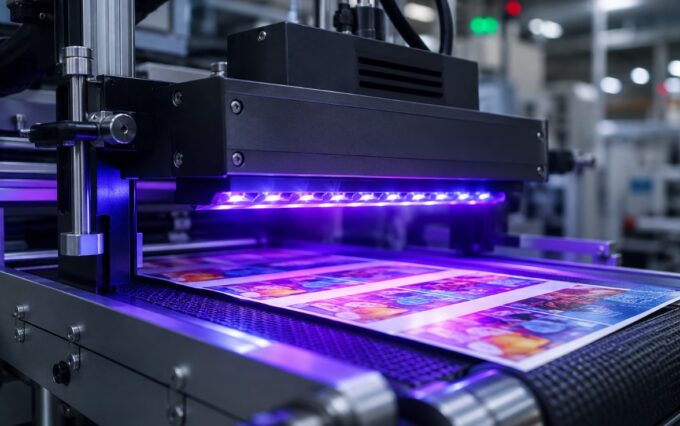
In the relentless pursuit of efficiency, many businesses are eager to discover solutions that can trim time off their production processes. Enter UV LED curing, a game-changing technology reshaping workflows across diverse industries. It dramatically accelerates the curing process, often slashing cycle times by 50% and beyond compared to conventional methods. This leads to enhanced output and quicker turnaround times. For example, a label manufacturer reported that employing UV LED curing halved their time-to-market—from production to delivery. Quite impactful, wouldn’t you say?
The underlying mechanics aren’t overly complex. UV LED curing utilizes a targeted beam of ultraviolet light to swiftly cure coatings, inks, and adhesives. Items pass beneath this intense light, promptly hardening materials without extended drying times. This non-contact curing method allows for efficient stacking and processing of products. When manufacturers adopt UV LED technology, they often find their machines operating more smoothly and rapidly, cutting costs while elevating capacity.
Real-World Case Studies of Increased Output
Take, for example, a printing company that migrated from mercury vapor curing lamps to UV LED systems. Their production volume didn’t just increase due to hastened curing; the integration of UV LED signage also permitted more vivid and precise colors—something clients desired. With quicker job setups and fewer reprints, they experienced a throughput increase of 35%. This is no mere anecdote; actual performance metrics from LED-enabled equipment reveal substantial benefits.
The relationship between UV LED technology and productivity is backed by tangible results. Numerous companies that have embraced this technology report measurable improvements. One leader in the packaging industry noted a nearly 30% reduction in waste after adopting UV LED curing. A drop in waste undoubtedly means less time on rework and a more efficient route to finished products.
“UV led curing doesn’t just speed up production; it’s a catalyst for a culture change in manufacturing.” – Industry Expert
Cost Savings That Matter: The Financial Benefits of UV LED Curing
Decoding Long-Term Cost Efficiency
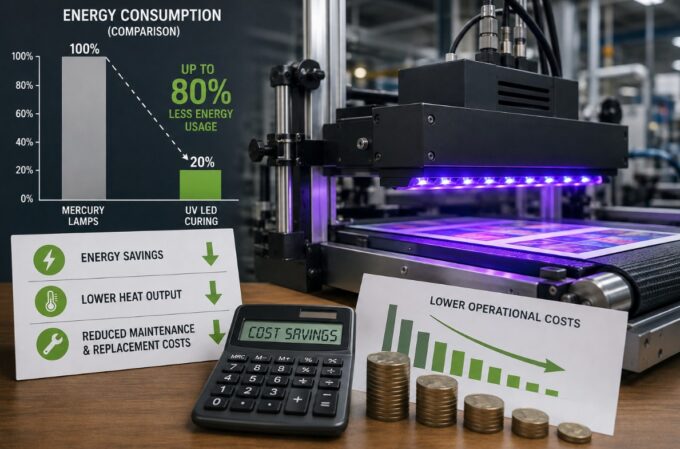
Cost-effectiveness is paramount in modern manufacturing. Companies often wrestle with soaring operational expenses, yet converting to UV LED curing has proven to yield significant long-term savings. While the initial investment may appear hefty, experts argue that the return on investment can be remarkable when accounting for lower energy expenditures and diminished labor costs. Organizations routinely observe their operational expenses decline over time, especially due to less frequent maintenance for UV LEDs as opposed to traditional bulbs.
It’s widely acknowledged that LED technology consumes considerably less power. In fact, when analyzing energy usage, businesses may see reductions of up to 80% by replacing mercury lamps with UV LEDs. The case for sustainability grows stronger when taking cooling costs into account. Traditional lamps generate considerable heat, but UV LEDs remain cooler, thereby easing the load on a facility’s HVAC system. Such changes can save companies hundreds of thousands annually.
Analyzing Energy Savings vs. Traditional Technologies
When formulating informed financial strategies, a comprehensive grasp of energy expenses is essential. Here’s a concise comparison:
- Mercury lamps: High energy consumption with a limited lifespan (around 2,000 hours).
- UV LEDs: Uses up to 80% less energy, often exceeding a lifespan of 20,000 hours, which drastically reduces replacement costs.
- Operational flexibility: LED systems can be activated or deactivated instantly without warm-up time, conserving energy during periods of inactivity.
Clients utilizing UV LED systems regularly see these energy savings reflected in their monthly expenses, which translates into considerable operational funds that can be reallocated towards other business needs. A thorough analysis usually reveals enhanced cost profiles from operational upgrades.
“Every dollar saved in energy or rework adds to the profitability. UV curing is an investment worth making.” – Financial Consultant
Safety First: Why UV LED Curing is a Game Changer for Workplace Safety
Reducing Hazardous Waste and Emissions
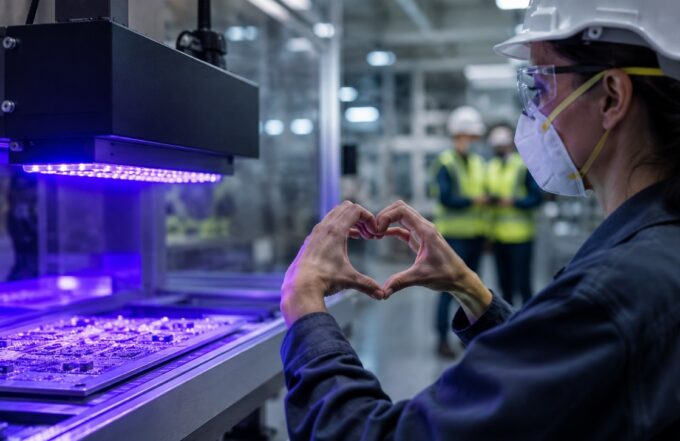
Occupational safety goes beyond merely shielding employees; it’s about cultivating a responsible work environment. Recently, companies have come to acknowledge that traditional curing methods frequently produce significant levels of VOC emissions and hazardous waste. UV LED curing transforms this situation dramatically. By using no volatile solvents, it substantially decreases the toxic emissions typically associated with conventional methods. This not only enhances compliance with environmental regulations but also fosters safer workplaces.
Beyond environmental implications, consider the benefits for employee health. By eliminating harmful materials, workplaces become more sustainable. Employees experience reduced exposure to toxic substances, leading to a decline in health risks over time. Even more importantly, this positive shift impacts workplace morale; employees who feel safe and valued often exhibit greater productivity and engagement. Data suggests that companies prioritizing employee safety tend to enjoy lower turnover rates and higher satisfaction levels.
How UV LED Technology Enhances Employee Wellbeing
Research clearly illustrates a connection between workplace safety and employee wellbeing. Industries adopting UV LED curing see marked enhancements not just in production efficiency but also in employee health indicators. The time lost due to illnesses from toxic chemical exposure diminishes considerably. Consequently, this improvement results in lower costs related to workers’ compensation and health insurance, effectively altering the operational cost landscape.
- Reduced emissions: Nearly no VOCs are emitted during the curing process.
- Compliance: Seamlessly meets or surpasses environmental standards.
- Healthier work environment: Improved air quality and minimized risk of health-related incidents.
The undeniable link between safety and profitability is increasingly recognized. A safer workplace helps retain talent while attracting skilled labor, ultimately enhancing overall business performance.
Versatility at Its Best: Applications You Didn’t Know Were Possible
Exploring Diverse Industry Use Cases
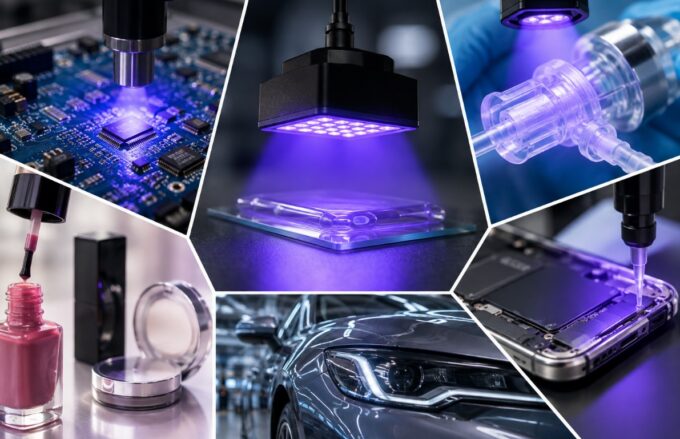
The versatility of UV LED curing is often underrated, yet it leaves a significant impact across various sectors. From automotive to consumer goods, the potential applications are noteworthy. While label or packaging manufacturers may spring to mind initially—and rightly so—the scope of UV curing reaches far beyond that. Various sectors are now making use of this technology:
- Electronics: Precise curing for circuit boards and electronic components.
- Medical devices: Reliable sterilization and curing of biocompatible coatings.
- Cosmetics: Fast-curing systems for nail polish and cosmetic packaging.
This technology extends beyond conventional applications; inventive organizations are exploring new possibilities with UV LED curing. For instance, a tech company has recently investigated using UV curing for adhesive bonds in smart devices—an area where precision is crucial. This adaptability illustrates the potential for broader applications than many professionals initially envision.
Innovative Approaches to UV Curing Solutions
As companies strive for evolutionary and revolutionary solutions, UV LED curing technology stands as a canvas for innovation. Integrating a UV LED platform permits the customization of curing solutions to meet specific requirements. Firms utilizing variable intensity settings in their UV LED systems reap the benefits of being able to adjust the curing process for diverse materials and thicknesses.
A prime example includes a furniture manufacturer that applied variable intensity UV curing to speed up the finishing process on premium wooden surfaces. This inventive approach not only improved production efficiency but also elevated product quality, leaving competitors scrambling to keep pace. Creativity in application propels competition and stimulates growth throughout industries.
- Custom solutions: Tailored curing profiles for varying material specifications.
- Integration with robotics: Automated curing systems that transform production lines.
- Environmental compliance: Implementing solutions in line with sustainability initiatives.
The outlook for UV LED curing is bright. Advancements in technology and its applications continue to transform sectors, not only enhancing productivity but also fostering a compelling narrative around health, safety, and sustainability.
All these factors are interlinked, forming a narrative that encourages businesses to rethink their current practices. Embracing UV LED curing has become essential for progressive organizations that aspire to succeed in the marketplace.
FAQ
What are some common industries benefiting from UV LED curing?
The benefits of UV LED curing technology extend well beyond traditional applications. Sectors such as electronics, medical devices, automotive, and cosmetics all harness its capabilities. This broad reach highlights the flexibility and efficiency inherent in UV LED systems.
How does UV LED curing compare to traditional curing methods?
When contrasting the two, UV LED curing stands out for its swiftness and efficiency. Conventional methods typically require longer drying or curing periods, whereas UV LEDs solidify materials virtually instantaneously. This results in major productivity gains and reduced downtime.
What initial investment is typically required for UV LED curing systems?
Initial investments can vary according to system specifications and material needs. While setup and equipment costs may appear substantial, the long-term savings achieved through reduced energy consumption and operational expenses generally justify the outlay. Forward-thinking businesses view it as a strategic financial decision.
Can UV LED curing systems integrate with existing production lines?
Certainly. Numerous companies find that UV LED curing can seamlessly integrate into their current setups without major disruptions. This adaptability enables manufacturers to boost productivity without overhauling their production processes.
What are the long-term environmental benefits of using UV LED curing?
By significantly minimizing VOC emissions and hazardous waste, UV LED curing greatly reduces environmental impact. Additionally, it aligns with sustainability goals, simplifying compliance with regulations while fostering a greener workplace atmosphere.
How does UV LED curing impact inventory management?
Shorter curing times and quicker turnaround rates often lead to more streamlined inventory management. The enhanced production speed facilitates a more consistent order fulfillment process, which reduces backlog and enhances customer satisfaction.
Are there specific certifications or standards for UV LED curing technology?
Indeed, most industries acknowledge various certifications related to safety and environmental compliance, such as ISO and ASTM standards. Companies adopting UV LED systems typically aim for these benchmarks to ensure quality and reliability.
What future innovations can be expected in UV LED curing technology?
The future appears promising for innovations in the UV LED curing realm. Anticipated advancements include greater energy efficiency, wider compatibility with diverse materials, and enhanced automation through robotics. These future developments will likely drive productivity further, catering to evolving market demands.