
Did you know that nearly 70 percent of customers say the post-purchase experience influences whether they buy again from the same brand? That moment after checkout, when expectations meet reality, is where loyalty is quietly built or lost. Most companies invest heavily in acquisition, yet the real relationship with the customer often starts after the payment goes through.
Navigating the post-purchase platform landscape can feel overwhelming. There are dozens of tools promising better tracking, smoother communication, and fewer support tickets. The challenge is not finding options, but choosing the right solution for your business model, scale, and customer expectations.
This guide is designed to help you think clearly, evaluate calmly, and choose with confidence, without chasing trends or shiny features.
What a Post-Purchase Platform Actually Does
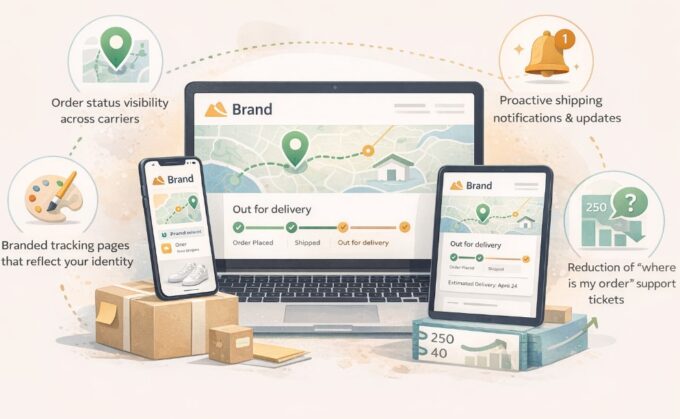
A post-purchase platform sits between your order confirmation and the final delivery experience. Its role is to keep customers informed, reassured, and engaged while reducing internal friction for your team. At its best, it turns order tracking into a brand touchpoint rather than a utility.
Most modern platforms focus on a few core responsibilities:
- Order status visibility across carriers and regions
- Proactive shipping notifications and updates
- Branded tracking pages that reflect your identity
- Reduction of “where is my order” support tickets
What matters is not how many features exist, but how well they fit your operational reality. A platform that looks powerful on paper can become noise if it adds complexity or requires heavy maintenance.
Why the Post-Purchase Platform Market Feels So Fragmented
Once brands move beyond basic order confirmation emails, they quickly realize how crowded the post-purchase platform market has become. Many tools appear to solve the same problems on the surface, shipment visibility, branded tracking pages, and delivery notifications, yet differ significantly once you look closer. Feature overlap is common, but flexibility, pricing logic, and long-term scalability often are not.
While analyzing popular post-purchase platforms, many ecommerce retailers are forced to look for AfterShip, Narvar and Parcellabs alternative in order to go beyond simple shipment tracking and email notifications. While most platforms promise smoother communication and fewer support tickets, the underlying approaches vary widely. Some are built for high-volume enterprise operations, others for fast-growing DTC brands that need adaptability. Taking the time to understand these differences early helps avoid locking your operations into a rigid setup that becomes costly or limiting as your shipping needs evolve.
Real Business Impact
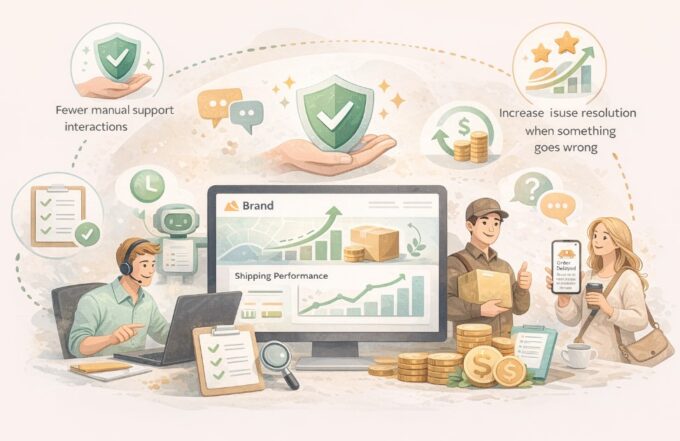
Post-purchase tools are often evaluated as operational add-ons, but their real impact is strategic. They influence customer trust, repeat purchase behavior, and even brand perception. When communication is clear and timely, customers feel in control, even if delays occur.
There are also internal benefits that are easy to underestimate:
- Fewer manual support interactions for your team
- Clearer visibility into shipping performance
- Faster issue resolution when something goes wrong
A strong post-purchase experience does not eliminate delivery problems, but it changes how customers perceive and tolerate them.
This shift in perception is often the difference between a refund request and a patient, informed customer who is willing to wait.
Key Criteria to Compare Before You Commit
Before committing to any platform, it helps to slow down and evaluate against practical criteria rather than marketing promises. This keeps decisions grounded and reduces the risk of costly migrations later.
Focus on these evaluation points:
- Ease of integration with your existing e-commerce stack
- Quality and clarity of customer-facing notifications
- Depth of analytics beyond basic delivery status
- Support responsiveness and onboarding quality
- Pricing transparency as order volume grows
Not every business needs enterprise-level complexity. A well-scoped solution that does a few things exceptionally well often outperforms bloated platforms that try to do everything.
How Different Platforms Support Different Business Models
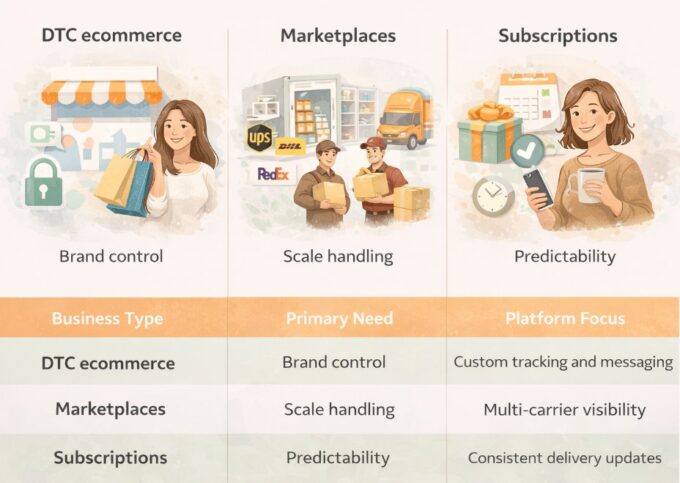
Not all post-purchase platforms are built for the same type of business. A direct-to-consumer brand shipping globally has very different needs from a regional marketplace or subscription-based store. Understanding where you fit helps narrow options quickly.
Here is a simple comparison overview:
| Business Type | Primary Need | Platform Focus |
| DTC ecommerce | Brand control | Custom tracking and messaging |
| Marketplaces | Scale handling | Multi-carrier visibility |
| Subscriptions | Predictability | Consistent delivery updates |
After reviewing a table like this, it becomes easier to eliminate tools that are misaligned with your core model. The right platform should feel supportive, not restrictive.
Common Mistakes Companies Make When Choosing
One of the most common mistakes is choosing based on feature lists instead of workflows. Another is underestimating how much internal adoption matters. If your support or logistics team avoids the platform, its value drops instantly.
Other frequent pitfalls include:
- Ignoring long-term pricing implications
- Over-customizing before validating core value
- Choosing tools without strong documentation
A post-purchase platform should simplify decisions, not create new ones. If it requires constant explanation or workarounds, it is likely not the right fit.
Conclusion
Choosing the right post-purchase solution is less about technology and more about intent. It reflects how seriously you take communication, transparency, and customer trust after the sale. When chosen thoughtfully, the right platform quietly supports growth while improving daily operations.
Take the time to assess your needs honestly, compare alternatives carefully, and prioritize clarity over complexity. The post-purchase moment is where your brand continues the conversation. Make sure the tools you choose help you speak clearly, consistently, and with confidence.