
Every day millions of people write emails, reports, messages, and documents almost entirely through a keyboard. For many professionals, typing becomes one of the most repeated actions during the workday. Yet surprisingly few users take the time to customize the keyboard features that shape how fast and comfortably they work.
With the right settings, keyboard can reduce repetitive effort, minimize typing errors, and speed up everyday tasks. Features such as predictive input, shortcut customization, key remapping, and text expansion allow users to adapt their typing environment to match their workflow.
Small adjustments often produce noticeable improvements. Saving only a few seconds on tasks that repeat dozens of times per day can quickly add up to significant productivity gains.
This article looks at the best keyboard features to customize for better workflow, focusing on practical tools and settings that help typing feel faster, smoother, and more efficient.
Smart Input Engines That Improve Typing Flow

Source: bestproducts.com
Modern input engines do far more than simply translate keystrokes into characters. Many tools now use predictive algorithms and contextual suggestions to reduce typing effort and improve speed. For professionals who type frequently, these tools can remove friction that slows down writing.
One strong example is the AI driven typing system available through 搜狗输入法官网 (Sogou input method), which many users rely on for advanced predictive input and intelligent suggestions. Typing becomes noticeably quicker thanks to real time prediction that anticipates the next word or phrase based on context.
Smart input engines reduce cognitive load. Instead of focusing on every keystroke, users can concentrate on the message they want to communicate.
Predictive text engines can reduce keystrokes by up to 30 percent in high frequency typing tasks, according to usability research from the Nielsen Norman Group.
Custom Keyboard Shortcuts That Remove Repetitive Work
Many productivity experts consider keyboard shortcuts one of the most valuable workflow improvements available. A well designed shortcut setup can replace hundreds of daily mouse movements.
Shortcuts work best when customized to match the tasks you perform most often. Email responses, formatting commands, project navigation, and document editing can all be simplified with personalized combinations.
Before creating new shortcuts, it helps to identify tasks that repeat frequently throughout the day. Typical examples include:
- Opening frequently used applications or files
• Inserting common phrases, templates, or signatures
• Switching between browser tabs or workspaces
• Launching productivity tools such as note apps or task managers
Shortcuts reduce interruptions in thinking. Instead of pausing to locate menu options, commands happen instantly through muscle memory.
Small efficiency improvements accumulate quickly. Saving just three seconds on a task repeated one hundred times per day results in several minutes saved without any noticeable effort.
Key Remapping for Better Ergonomics and Control
Some keyboard keys are rarely used, while others receive constant pressure throughout the workday. Key remapping allows users to reassign less useful keys into shortcuts or functional commands.
This feature is particularly helpful for programmers, designers, and editors who rely on specific keyboard actions. For example, a rarely used key such as Caps Lock can become a shortcut for launching tools, switching windows, or triggering automation scripts.
A simple remapping strategy might include:
- Turning Caps Lock into an additional Control key for coding shortcuts
• Assigning macro commands to unused function keys
• Creating navigation controls that reduce hand movement
• Mapping multimedia controls for faster audio or video management
Interesting fact
Professional programmers often remap keys to reduce finger travel distance. Studies in ergonomic keyboard design show that reducing repetitive movement lowers fatigue during long typing sessions.
Key remapping tools are widely available on most operating systems and can be adjusted gradually until the layout feels natural.
Text Expansion for Faster Writing

Source: medium.com
Text expansion is one of the most underrated keyboard customization features. It allows short typed triggers to instantly expand into longer phrases, sentences, or full templates.
Writers, customer support agents, marketers, and developers benefit significantly from this feature because it eliminates repetitive typing.
Below is a simple example of how text expansion can work in practice.
| Trigger | Expanded Text |
|---|---|
| /sig | Full email signature |
| /meet | Standard meeting response template |
| /addr | Office address and contact details |
| /faq1 | Frequently used support explanation |
After setting these shortcuts, typing the trigger automatically inserts the longer text. The result is faster communication and fewer typing errors.
Important note
Text expansion works best when triggers are easy to remember but unlikely to appear in normal typing.
Many professionals report saving several hours per week once text expansion becomes part of their workflow.
Adjustable Key Repeat and Delay Settings
Keyboard responsiveness affects how quickly characters appear when keys are held down or pressed repeatedly. These settings are rarely adjusted, yet they influence typing comfort and speed more than many people realize.
Two key parameters control this behavior.
- Key repeat delay determines how long the keyboard waits before repeating a key when held down
• Key repeat rate controls how fast characters repeat after the delay period
Adjusting these settings can improve typing rhythm and reduce accidental repeated characters.
Key repeat settings exist primarily to match human motor behavior. When properly calibrated, they align keyboard response with natural finger movement.
Many users prefer a shorter delay combined with a moderate repeat rate. This configuration allows smooth text editing and quick navigation through documents without creating excessive repeated characters.
A short testing session in system settings usually helps identify the most comfortable configuration.
Custom Keyboard Layers and Profiles
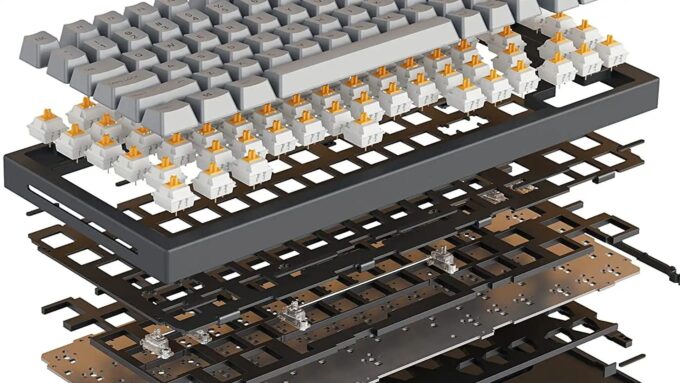
Source: pcworld.com
Advanced keyboards and software tools support multiple keyboard profiles. Each profile contains a different layout, shortcut set, or macro configuration.
This feature is particularly useful for people who switch between different types of work during the day. Writing, coding, gaming, and design tasks often require very different keyboard behaviors.
For example, separate profiles might include:
- A writing profile focused on text expansion and editing shortcuts
• A programming profile with navigation commands and code snippets
• A design profile that triggers creative software tools
• A general productivity profile for email and scheduling
Keyboard layers allow users to toggle between these profiles instantly.
Did you know
High end mechanical keyboards used by developers often support up to ten customizable layers. Each layer activates a completely different command structure.
Profiles allow a single keyboard to adapt to multiple workflows without constant manual adjustments.
Final Thoughts
A keyboard may seem like a simple device, yet it remains one of the most powerful productivity tools in daily work. Small adjustments to shortcuts, predictive input systems, and typing behavior often remove countless tiny delays that accumulate over time.
Also read: iPad Smart Keyboard Issues
Start with one or two improvements rather than changing everything at once. Shortcut customization, text expansion, and predictive typing are often the easiest upgrades to adopt.
Over time, a well configured keyboard stops feeling like a tool and starts acting like an extension of your thinking process.